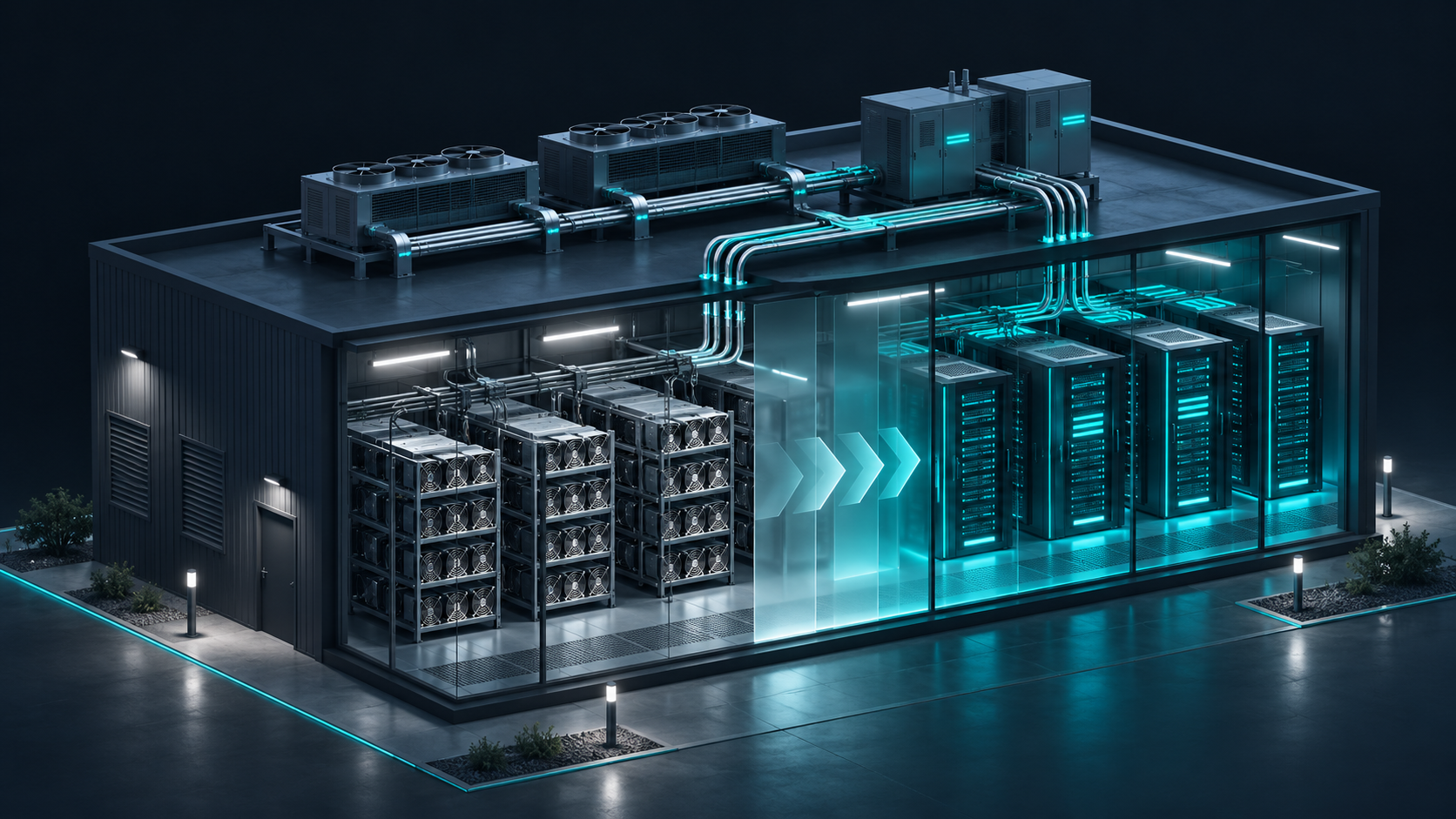
A site built to consume large amounts of electricity for Bitcoin mining can be valuable to another industry competing for power and data center capacity. That is the opportunity behind Core Scientific's shift toward AI and high-performance computing.
In its quarterly filing published on 5 November 2026, Core Scientific described developing, converting and expanding most of its facilities to support AI and high-performance computing workloads. Management also indicated that remaining Bitcoin self-mining operations would be wound down by the end of 2026, according to reporting on its earnings call. Company filing · Cointelegraph
The story is about more than one company's change of label. It shows how a business can reuse access to power and physical sites while adopting a very different operating and financing model.
What a Bitcoin mine and an AI data center share
Both need land, a reliable connection to electricity, physical security and equipment that must be cooled and maintained. Securing power and developing a site can take substantial time. A miner that already controls useful infrastructure may have a head start compared with a developer beginning from scratch.
That does not mean the existing building is automatically ready for AI. Mining equipment and high-density AI computing can have very different requirements for networking, cooling, uptime, redundancy, building design and customer service.
A useful distinction is between having access to power and having a completed facility that meets a customer's requirements. The first is valuable; the second can require significant investment and construction.
From mining rewards to customer contracts
In self-mining, a company operates hardware that contributes computing power to the Bitcoin network and earns mining-related revenue subject to network conditions. Its economics depend on factors including Bitcoin's price, network difficulty, equipment efficiency and electricity costs.
In a colocation model, a data center provider supplies infrastructure and services to a customer running computing workloads. Revenue is shaped by contracts, delivered capacity and the ability to build and operate facilities as agreed. The provider may not own or operate every AI model or GPU hosted at the site.
The two models therefore expose a business to different uncertainties. A long-term contract can make future revenue more visible, but it also raises questions about construction deadlines, financing costs and whether a customer remains able to pay.
Why the transition is not free money
Core Scientific's filing identifies risks including construction execution, customer concentration, financing and the financial health of its primary colocation customer. These are company-reported risks, not proof that a particular contract will fail. Core Scientific Form 10-Q
For any miner considering a similar move, investors and customers should examine:
- Power: Is the available capacity contracted, dependable and suitable for the new workload?
- Buildout: How much work remains before a site can host the contracted service?
- Capital: How will conversion be funded, and what happens if costs or rates rise?
- Customer concentration: Is revenue dependent on one tenant or a small group?
- Timing: Is the announced capacity operating, under construction or only planned?
- Contract terms: Who pays for equipment, power, maintenance and delays?
An announced project, a signed contract and a live data center are different milestones. Treating them as the same can make a business look further along than it is.
Does this mean Bitcoin mining is losing to AI?
Not necessarily. Individual companies have different sites, financing, customers and strategies. Some will continue mining; others may allocate some or all of their infrastructure elsewhere. The Core Scientific case does not establish a universal trend or prove that AI hosting is always more profitable.
The wider competition is for scarce inputs: power, land, equipment, financing and skilled operators. Companies that already control some of those inputs have options. Whether converting them creates value depends on the cost of the conversion and the durability of demand.
What to watch
Follow operating capacity and actual financial results alongside announcements. A successful transition would require facilities to be completed, customers to use them and revenue to materialize under terms that support the company's obligations. Delays, rising capital needs or concentrated customer exposure would tell a different story.
Core Scientific's move is a clear example of a former mining-heavy business changing direction. It is also a reminder that the infrastructure behind both Bitcoin and AI starts in the physical world, long before any digital output appears.
Based on information available on 9 November 2026. This article is not an investment recommendation.