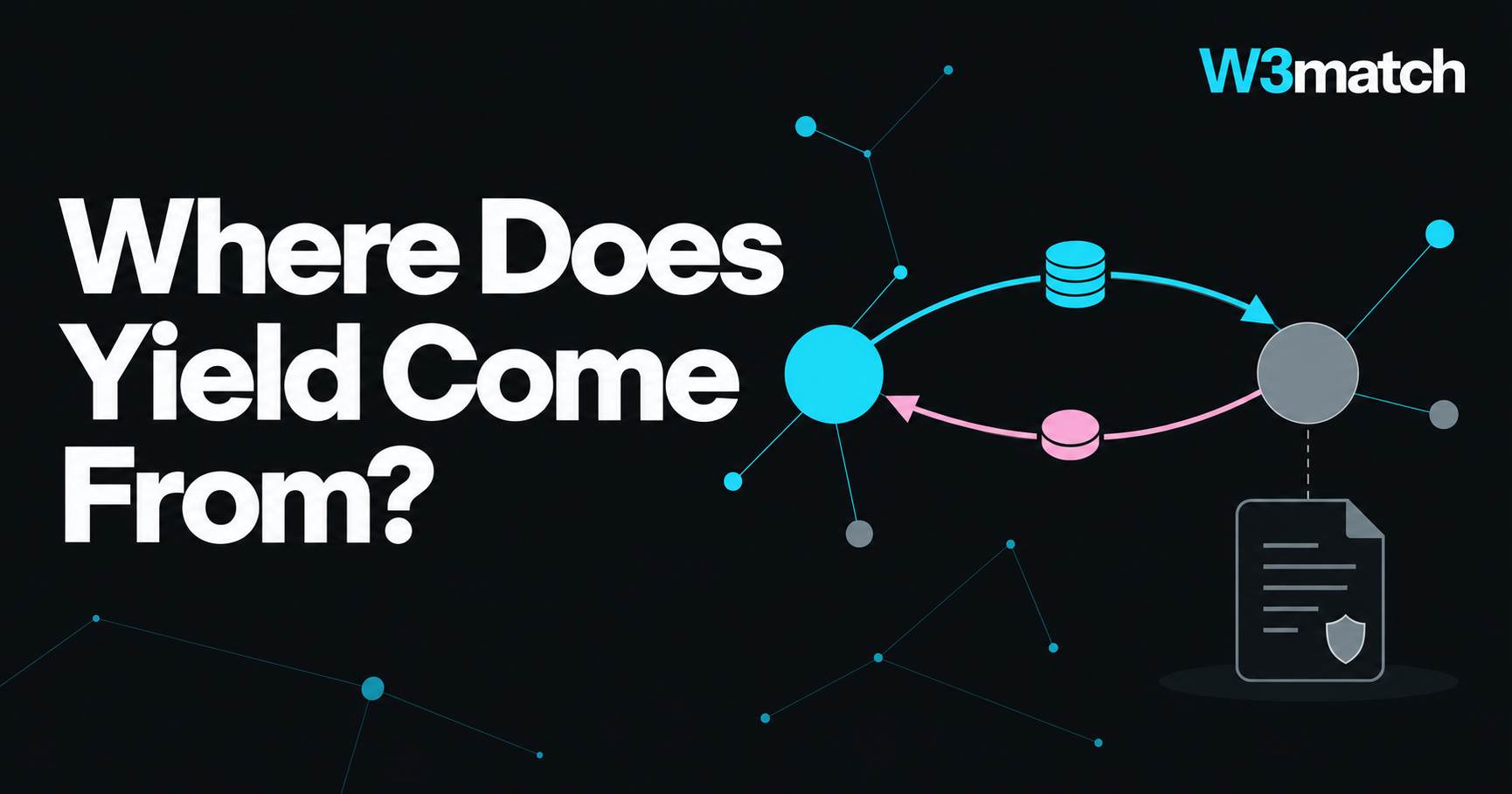
Maple and Centrifuge sit at different points in onchain credit. Maple operates lending products with underwriting and borrower exposure. Centrifuge provides infrastructure for funds whose managers set their own mandates. The useful comparison is a named Maple product against a named fund, with their collateral, loss rules and exit routes.
The comparison becomes useful when you follow a specific loan or fund. Who receives your money? What supports repayment? How much time separates a missed payment from your ability to recover capital?
Maple connects deposits with lending
Maple's current lending products include syrupUSDC and syrupUSDT. Its borrower model includes institutional lending secured by digital-asset collateral. That means a product can sit in an RWA discussion while retaining substantial exposure to crypto markets and crypto businesses. Maple transparency, Maple and Aave integration.
Collateral changes the loss process, but it doesn't remove every way to lose money. The manager needs to value it, monitor it and sell it when necessary. A fast market move can reduce coverage before a liquidation finishes. Concentrated collateral can make that problem harder.
The practical questions concern the loan book. Check the type of borrower, the collateral, the loan terms and the share of capital exposed to the largest counterparties. A visible deposit token is only the front end of that credit operation.
Income also has several destinations. Borrower payments support returns to lenders and the protocol's revenue. A depositor evaluating syrupUSDC should focus on the deposit product. A SYRUP buyer needs to examine the protocol's retained economics separately.
Credit risk follows the loan, not the token
Maple and Centrifuge sit at different points in an onchain credit operation.
Centrifuge depends on the fund
Centrifuge is a platform that managers can use to tokenize financial products. Credit funds are part of that range, alongside other asset classes. The manager and offering documents determine what a particular fund can own and how it handles investor access. Centrifuge manager documentation, available asset classes.
A private-credit fund can hold loans whose repayment depends on operating businesses. Another fund can hold structured credit securities with a different claim on cash flows. The two may use the same onchain platform while exposing investors to different borrowers and loss rules.
For that reason, “Centrifuge yield” is too broad a phrase for due diligence. Find the exact fund, identify its manager and read the mandate. A platform-level security review won't tell you whether the manager priced a borrower's credit risk correctly.
Historical credit structures sometimes divide investors into senior and junior positions. Senior holders get paid earlier; junior holders absorb losses first under the structure's terms. That protection only works within the available loss buffer. It isn't a substitute for understanding the assets, and it isn't a feature to assume for every current Centrifuge fund.
Two kinds of collateral create different problems
Digital collateral can have visible market prices and an onchain liquidation route. It can also lose value quickly when everyone wants to sell. The loan may look well covered until market depth disappears.
Offchain collateral can have a different problem. A receivable or business asset may require documentation, a servicing process or legal enforcement before it becomes cash. The recovery value can be meaningful while the recovery time is uncomfortable.
This is why comparing headline collateral ratios across products can mislead. A ratio against a liquid token and a ratio against a disputed invoice don't imply the same protection. Ask how the manager would realize the stated value during a default.
In both cases, a price feed can display a number without making a sale available at that number. The manager's rules for updating valuations and recognizing losses affect the fund's reported value. Those rules deserve a place in the comparison next to yield.
Redemption is a second credit decision
A deposit product may advertise withdrawals while lending the money for longer periods. To meet requests, it can hold liquidity, receive loan repayments, sell assets or apply a queue. The exact mechanism determines how quickly you can leave.
Imagine several large depositors requesting an exit together. The assets may still be performing, but the available cash may be insufficient for immediate withdrawals. That's a liquidity problem even before it becomes a credit loss.
Your holding period should match the product's exit terms. If you need the money on a known date, inspect withdrawal windows, request deadlines and the conditions under which a manager can delay payment. A normal-market demonstration doesn't cover every stressed scenario.
Secondary-market liquidity is another route, with another price. A buyer taking over your claim may demand a discount when redemptions are slow or borrower quality is uncertain. A token can be transferable while its economic exit remains costly.
A concrete comparison: syrupUSDC and ACRDX
ACRDX is the Anemoy Tokenized Apollo Diversified Credit Fund, offering tokenized exposure to Apollo's diversified credit strategy. Centrifuge's app lists a $500,000 minimum for direct fund access. That is a different mandate and investor route from a stablecoin deposit into syrupUSDC. ACRDX launch context, direct fund access.
The exit is especially revealing. Centrifuge describes ACRDX's standard fund liquidity as quarterly and an independent Fission service supplying immediate USDC liquidity. The latter adds a service provider between the token holder and the slower underlying fund. Its capacity and terms need separate evaluation. Centrifuge and Fission.
| Dimension | syrupUSDC | Direct ACRDX fund shares |
|---|---|---|
| Exposure | Maple institutional lending, including digital-asset-secured loans | Apollo diversified credit strategy through a tokenized fund |
| Investor route | Stablecoin deposit product, subject to jurisdiction and product terms | Approved direct fund investors; app lists $500,000 minimum |
| Exit question | Withdrawal liquidity and processing under the pool's rules | Quarterly standard fund path; independent Fission liquidity route |
| Main diligence task | Borrowers, collateral management and concentration | Underlying credit strategy, fund terms and liquidity-provider conditions |
Maple documents queue-based withdrawal processing and a separate impairment process for distressed loans. A lender leaving during impairment realizes the reduced value and gives up participation in later recoveries allocated to remaining lenders. That detail matters more than a generic claim that collateral protects the deposit. Withdrawal manager, defaults and impairments.
Build the rest of the comparison
| Check | What to record |
|---|---|
| Borrower exposure | Named borrower classes, concentration and connected parties |
| Security | Collateral type, valuation, enforcement and liquidation route |
| Income | Borrower payments, product costs and any temporary incentives |
| Loss allocation | Who absorbs losses first and how much protection exists |
| Exit | Redemption process, liquidity buffer and queue conditions |
| Administration | Manager powers, custody, price updates and reporting |
The point of this sheet is to make two products comparable before their APYs enter the discussion. If one disclosure is missing, leave the field unresolved. A precise-looking number copied from an old post is worse than an honest blank.
For short-duration government exposure, use the Treasury comparison instead. Applying the same yield table to Treasury funds and borrower-funded credit can hide the risk premium you're being paid to accept.
SYRUP and CFG are separate positions
A holder of a Maple deposit product receives the result of that product's lending strategy. A SYRUP holder owns a protocol token with a separate economic mechanism. MIP-021 specifies retention of purchased tokens in the Syrup Strategic Fund; Maple's transparency page separately reports executed purchases. A purchase doesn't automatically remove a token permanently from supply. MIP-021, purchase reporting.
That makes the treatment of acquired tokens relevant to the investment thesis. A buyback can create demand at the time of purchase while leaving the treasury able to use the tokens later. Check execution and disposal policy alongside the allocation formula.
CFG requires attention to Centrifuge's proposed restructuring as well as its platform growth. CP172 concerns a possible change to company shares; the materials reviewed here don't establish completed conversion. CP172 proposal. Our value-capture article covers the proposed terms.
What would make me comfortable with the yield?
I would want a product whose credit exposure I can explain without relying on a slogan. That means understanding the paying borrower, the manager's protection and the exit route. Regular reporting should let me check whether the loan book still matches that explanation.
Then I would compare the return with a simpler alternative. Extra yield should compensate for something identifiable: credit risk, a longer commitment, less liquidity or a more complicated recovery process. If the extra income comes from incentives, I would calculate the return without those incentives too.
Start with how RWA claims work if the ownership structure is unclear. A borrower-funded return becomes easier to judge once you can trace the claim all the way back to the party expected to pay it.